Posts
Posts


Tuesday, July 26, 2011


IG of Police: Resignation Haram!
The
Niger Delta militants of the Southern Nigeria have had their days; the
kidnappers of the Eastern Nigeria have equally had their hay days; the street
urchins of the Western Nigeria have always had bountiful harvest; is Boko Haram
having its day also? Why has the country suddenly become a hotbed of
insecurity? Whose interest do these terrorist groups represent? What hope does
Nigeria have in tackling the menace of national insecurity? Obviously, the Inspector General of Police
(IGP), Hafiz Ringim cannot be sacrificed on the altar of avarice of some
unscrupulous individuals in the country. After all, in this part of the world,
it not only Boko Haram, but “resignation haram.”
 |
| Bomb Blast at Police Headquarters, Abuja |
Nigerians
are now living in perpetual fear as horror of uncertainty has built its
ferocious tent in the sky and the cloud now precipitates fierce sound, not from
thunder and lightening but from horrendous bombing and explosion that has
plunged the nation into a gulf of confusion and ruins. Every day, rains of
pandemonium and cloud of uncertainty stare at Nigerians as people are unsure of
whom the next victim is and which city would be beleaguered by the Boko Haram’s
sporadic bullets, poisonous arrows, sizzling bombing, faceless maiming and
gruesome killing. Today is Maiduguri, tomorrow is Zuba, and next tomorrow is
Bauchi or Suleja and in the midst of all these, countless number of Nigerians
are dying, property of immeasurable value are on daily basis reduced to naught
and the image of Nigeria is dangling in the international arena. For Nigeria,
this is one of the most threatening and trying moments since the 1976 Civil
War, yet resignation haram.
It
is clear that each region of the country has its own peculiar vice(s). The
South has militants, the East is synonymous with kidnapping, the West has
street urchins, and the North has Boko Haram. In all of these, accusing fingers
are pointed at the direction of the government; the failure of the leaders to
give Nigerian people meaningful life. When late Umaru Musa Yar’Adua was the
president of Nigeria, his administration was under siege from the Niger Delta
militants; today the direction of violence has taken a U-Turn. May be the Niger
Delta militants would tomorrow open their munitions stores whenever there is a
U-Turn in leadership!!
The
Boko Haram of the Northern Nigeria are different from the Niger Delta militants
of Southern Nigeria in many ways. The Boko Haram, unlike the Niger Delta people
are faceless, lack identity and anonymous. Their official name is Jama’atu
Anlis Sunna Lidda’awati wal-Jihad which means “People Committed to the
Propagation of the Prophet’s Teachings and Jihad.” This name ordinarily does
not have negative connotation, but how the name later transformed to Boko Haram
and the idea behind the metamorphosis is quite unclear. But we know that ‘Boko’
is an Hausa word which means ‘animist’, ‘western’ ‘education’ while ‘Haram’
which is an Arabic word means ‘sin’ or literally, it means ‘forbidden’. The
forbidden sins according to the ideology and lexicon of the Boko Haram are all
forms of western education, science, and government. But who will tell the Boko
Haram that ‘killing is forbidden’ or ‘Keshewa Haram’ by Islamic doctrine and
Prophet Muhammed (S.A.W), whose ideologies they claim to propagate?
The
Boko Haram, were previously restricted to Maiduguri, and few parts of the North
like Bauchi state but today, they are already striking beyond their lawn. There
have been series of embarrassing explosions before and after the general
elections and in all these explosions, Boko Haram is a prime suspect. For
instance, on July 26, 2009, the group had attacked Dutse Tanshi police station
and several members of the sect, including two policemen were reportedly
killed. On September 7, 2010, Boko Haram stormed federal prison in Bauchi and
freed about 700 members that were awaiting trial. Also, several Nigerians lost
their lives when the group launched an attack at Mammy Market in the 33
Artillery Brigade Headquarters, Bauchi. And more recently, on June 26, 2011,
the Boko Haram sect had equally stormed a drinking joint in the Maiduguri
metropolis and many innocent Nigerians lost their lives. Yet, resignation Haram.
The
Niger Delta militants are different from the Boko Haram in many ways. Flipping
through history, the crisis in Niger Delta started in the early 1990s over
tension between the foreign oil companies and some Niger Delta minority ethnic
groups who felt they were being marginalized and exploited. They alleged that
oil companies took over their farm land and water and gave nothing in return,
except polluted environment. The Niger Delta crisis, at the infant stage, was
concentrated in Warri but it later plummeted and diffused to others parts of the
Niger Delta areas. The militants in the Niger Delta always claim that they
represent the interest of the Niger Delta people. But who are the Niger Delta
people? Is it the militants themselves who were disrupting the security
arrangement of the region so that they can dispel and fetch huge quantity of
oil from the pipes? Is it the political elites in the region who, out of
selfishness have refused to develop the region and provided reasons for the
unemployed youths to take up arms? The real Niger Delta people are the common
and ordinary men whose terrestrial and aquatic resources are being tampered
with for the sake of oil exploration. Though the Niger Delta people were saying
that it is unfair to revere the oil and forsake the people. But one of the
critical questions is how much the ordinary man benefits do from such struggle.
Are the government and multinational companies in the Niger Delta now revering
both the oil and the people?
Since
the pre and post-election explosions, which was interlocked by successive
killings, no arrests have been made. When Hafiz Ringim, the Inspector General
of Police (IGP) announced that the days of Boko Haram were numbered, he never
knew he was inviting more troubles and embarrassments. The bomb explosion that
rocked Louis Edet House, the Police Headquarters in Abuja on June 16, 2011 was
the most embarrassing moments for the Nigerian Police Force and other security
agencies. Even the Tafa Balogun scam was not as embarrassing as the bomb blast
at the force headquarters. The explosion is a dangerous signals that no where
is safe in Nigeria and also an indication that the Boko Haram are on top of
their game. It also reminded all students of history, the September 11, 2001
terrorist attack that reduced the World Trade Centre to rubble.
There
has been pressure on the IGP to tender his resignation since the attack on the
Police Headquarters. Nigerians hardly resign. Just recently, in Cyprus, the
Chief Security Boss has resigned as result of fiercely explosion at the
country’s Naval Base. This cannot happen in Nigeria because resignation Haram.
But would the resignation put an end to the spate of gunshot, killing and
explosion that has heralded the country? The security situation is much more
complex than that. Developed nations like the United States of America, Russia,
France, Japan and Britain had suffered security failures at different times.
The most prominent is the September 11, 2001 attack on the World Trade Centre.
The truth is that outlaws always have upper hand and they always put nation at
a defensive end; they can launch attack at any time and from any point. This
perspective does not however provide shield for the Nigeria security
operatives. After all, it is their responsibility to restore peace when there
is lawlessness and disorderliness; a responsibility that has in recent times
become a mirage.
Who
are the Boko Haram representing? Can we say that they representing the Muslims?
The answer is no because Islam preaches peace and every genuine Muslim is a
forerunner of peace. This group was founded in 2002 by the slain leader, Ustaz
Muhammed Yusuf. After his death in 2009, Nigerians thought the group had been
eliminated but since then the group has been operating in diverse ways, and
their mode of operation still remain illusive to the Nigeria security
officials, as no arrests have been made in recent times. According to media
reports, the Boko Haram vowed to continue fighting until the Nigerian
constitution is pushed aside for a new government. In order to avert this, people
are already pointing fingers at the direction of amnesty.
Is
amnesty the solution to the prevailing insecurity? How can government dialogue
with clandestine and faceless individuals whose activities breed killing,
confusion, destruction and national unrest? When the Federal Government, under
the administration of the late President Umaru Musa Yar’Adua announced to grant
amnesty to the Niger Delta militants on June 26, 2009, it was not a dialogue of
the deaf; it was a dialogue between the government and a groups whose members
were known. In the case of Boko Haram, there are no known members. Moreover,
how can federal government continue to dialogue with outlaws after they have
killed many innocent Nigerians, subjected the nation to harassment and
embarrassment? Amnesty is sheepish, and can only breed the proliferation of
outlaws. The government should not trade long term security for immediate peace
and order. Amnesty is nothing, but a temporary solution to a permanent problem.
The
problem of insecurity in Nigeria should be tackled and approached from the
micro level. Let there be jobs for the youths; the government should intensify
its efforts towards making education accessible and affordable to the common
man. The children of the common man are the most likely vulnerable ones; they
can hardly resist the plump advances of the outlaws. The militants in the Niger
Delta can never be the children of owners of oil wells or the children of an
average teacher; the children of the local farmer in a remote village in the
North who does not have reason for being alive would rather venture into
suicide and clandestine movement if that would make his siblings live a better
life. The Boko Haram phenomenon may have some underlying political intrigues,
but the truth is that such intrigues can only succeed in collaboration with the
vulnerable groups in the society; those whose future is not certain and whose
tomorrow is neither insured nor secured. For now, the federal government should
declare absolute war over any group whose mission is to bring disgrace and
embarrassment to the nation. By negotiating and dialoguing with outlaws, the
government is legalizing their corporate existence. For the Boko Haram, it is
not only “Boko” that is “Haram” ‘killing’ is Haram and to our dear Inspector
General of Police, Hafiz Ringim “Resignation Haram.”
Wednesday, June 8, 2011
My African Woman
Like a lake in the desert
Every bird wants to drink of her water
Like the Garden of Eden, flawless
Nature caresses her naturalness
Like a needle in a hay sack
May be difficult to find before the sun retraces its track
Like the African once-cherished value of virginity
Visibly scarce in this vicinity
Like a lion in the jungle
Only a privileged huntsman gets her without rumble
Beauty, character and decency to juggle
All, she combines with enigma
There, in the downtown region, I was signaled
By the virtues of the African Woman
Emmnats©2011
This poem is dedicated to the African Woman, who combines beauty, character and decency with enigma. Love you, the African Woman.
 |
| Ojochide Treasure Yusuf |
Saturday, October 23, 2010
A Vote for the Half-Baked Graduate
By Emmanuel Nathan Oguche
It pricks the heart when you set your eyes on them. Their stories squeeze pains and agonies out of your nerves when you hear of them. With their battered hope and shattered dreams, the shapeless shoes on their legs would tell you the distance they have covered, and how long they will have to trek from one street to another, procreating frustrations and meeting a dead end as they persistently search for the nonexistent. Some say it’s not the fault of theirs, while others believe that they are not absolutely guiltless. But one thing is sure: they are victims of a vandalized system; they are those who narrowly escaped and sprouted out of a cramped and suffocated system; they are neither bread nor cake but are often referred to as the half-baked, the nomenclature that has replaced the products of our hitherto glorious citadels of learning where scholarship and intellectual barter flourished like mushroom. They are the Nigerian graduates. Annoyingly, even those who lack the moral justification to whisper are screaming on their voices, shouting “crucify him, crucify him”; those who, when they cough, vomit mammoth of grammatical errors in the midst of senseless discourse; those whose actions and inactions have dragged us several decades behind; those who have exchanged the future of this country with fabulous fat foreign accounts are among those who christened the new Nigerian graduate as “half-baked”.

Salisu Suleiman of Good Governance Group dispassionately painted the passion of today’s students, a typical Nigerian student in Daily Trust June 7, 2010: “I interact with students who know everything about soccer, nothing about Socrates; all about Arsenal, nothing about Aristotle; all about Maradona, nothing about Michelangelo; all about Pele, nothing about Plato.” As for me, I see students who can stand united for MAN-U, not against ignorance; people who know when referee is right or wrong, not the wrongs of the leaders; those who are always in unison and loyal to their football clubs, not to their fatherland; they are quite knowledgeable about the scorecard of Premiership League, not about annual ritual of fiscal policy! But is the fault of theirs? Soccer give them joy than those boring philosophies of Socrates; Arsenal make them proud than the knowledge of Aristotle that many of their forerunners have acquired but can show nothing for it; Maradona’s dribbling panache rejuvenates their dying and hopeless souls than Michelangelo’s paintings and drawings that mean nothing to the system; Premier League scorecard represents reality than the annual ritual of fiscal allocations! Fellow Nigerians, is it the fault of Nigerian students that they paint their cars, rooms, and every part of their body with Barcelona FC color, Arsenal bangles and badges, Manchester United photo frames and Chelsea caps? It seems true that the only living heroes we have today are football cults. Where are the leaders? Where are the intellectuals? Where are the bureaucrats? Where is everyone?
Every year, thousands of Nigerian graduates in different batches, are discharged into the already saturated labor market that accommodate escalating number of unsold products. Strangely, in today’s labour market, quality products are seem to be sold cheaply while inferior goods are attached more values in terms of Naira. In the market too, fair play is regarded as naivety while foul play is regarded as a display of tactics. In the labour market also, rottenness sells more than freshness. It is surprising that an irresponsible father that gave birth to an irresponsible son now feels embarrassed about the behavior of his child! Nigerian graduates have become source of embarrassment to their nation and the nation is embarrassed? When the National Examinations Council (NECO) released its 2009 November/December Senior School Certificate Examination (SSCE) results, less than two per cent who sat for the examinations could boast of five credits, including Mathematics and English Language. Every year, corporate organizations pour their aspersion and dissatisfaction about the ‘below-standard’ performance of Nigerian graduates. National Youths (dis)Service Corp (NYSC)? All these represent and capture the present standard of education in Nigeria; the disappointment mirrors the decadence, deterioration in the educational sector; it shows our collective shame, individual failures; it puts in the picture the attitudes and values attached to the future of this country; it’s an indicator of where we are and where we will be and above all, it reflect the state of this nation. If a graduate is half-baked, it therefore means that there is a leakage within the system; if a graduate cannot construct a simple sentence, it means that somebody somewhere within the system has failed to ‘construct’ a simple policy that will mitigate imminent lapses. Also, any discomfiture a graduate gets in the corporate environment should be seen and treated as an embarrassment to the entire nation, not just a personal or individual embarrassment.
Yes, it is true that many Nigerian graduates are half-baked. But many people still believe that those ‘half-baked’ graduates are more baked than many House of Assembly members, Governors or Ministers who are today adjudged as being successful politically but have performed woefully in terms of national development. Have you not heard of a Ministerial nominee who could not recite our National Anthem? Or another who could not differentiate between Obasanjo’s NEEDs and needs in Economics? Are they better baked than the Nigerian graduates of today? They are many “Honourables” in the House or those whom Dr. Wale Okediran fearlessly referred to as the “Tenants in the House” who have never made a striking headline since they are elected into public office except headlines from one form of scam or the other and the extravagant razzmatazz of their victories at the election tribunal. But we all know that as soon as they are declared winners, their voices are lost among the ‘’yes men”, “we concur fellow”, “honourable no question” or those whose character exhume new identity and it may not be wrong to call them “sitting allowance warlords” “Ghana must go lifters” and “mobile ATM” dispensing Dollars and Pound Sterling in place of law-making.
Graduates do not bake themselves. If a cake is half-baked or not baked at all, is it the fault of the cake or one who baked the cake? In March 2007, one of the most vocal Ministers of Education in the country’s history, Oby Ezekweseli fashioned Community Accountability and Transparency Initiative (CATI) which was intended to inform Nigerians about how much money was expended on education and to know whether such money were judiciously utilized. This initiative was to empower Nigeria to ask intelligent questions that bother on accountability, probity, frugality and efficiency. CATI would have accorded Nigerians to ask what government officials are doing, what Schools Management, Vice Chancellors, Rectors, Provosts are doing with tax money. During the launch of this noble initiative, the gory slides about the appalling conditions of Nigerian children receiving lesson on the floor, sitting under tree and overcrowded classroom squeezed tears out of Ezekweseli’s eyes. What do you expect when children receive lessons from half-baked teachers, under a half-baked condition? It will be unfair to expect that child to be fully baked if he is fortunate to be among the few graduates. Victims of a half-baked system, you may say. Posterity will judge, Oby’s tears that flowed the day CATI was launched will summon curse on those who cast off the initiative after her tenure, not because it lacked merit but due to the fact that it is anti-embezzlement, anti-fraud and anti-account-fattening.
The current standard of education is a victim of a rotten system; a system that has no regard for quality, a system that is ruled, dominated, hijacked by group of people who give little or no regard to the prosperity of this country. It is so unfortunate that those who are killing the system today are beneficiaries of free education; they are the ones baking the half-baked graduates. The Nigerian generation today is not better than a half- baked generation. What do you expect from politicians who come to power through flawed electoral system and those who are more obsessive about making policies that will change their fortunes rather than that which will transform the entire Nigerian society? What do you expect from lecturers whose income from bribe is far greater than salaries that are due for them? It is no longer news that the libraries in our tertiary institutions are haven of antiquated materials - they are as thirsty of instructional materials as they are of readers. Even those whose children have never tasted the bitterness experienced by public schools attendants are screaming on their voices that Nigerian graduates are unemployable as if available jobs are adequate for the employable groups. Is it not in Nigerian tertiary institutions where the use of candles has replaced electricity? Is it not in Nigerian schools, students sacrificed their feeding allowance on the altar of avarice, the common trait among our tertiary institutions lecturers? It is in the Nigerian schools where 15 students are stocked and cramped in a room that is meant for two students as if it’s a natural thing to do. It’s in the Nigerian higher institutions that students attend lectures by standing or writing on the back of their colleagues; it is in Nigeria young graduates go back home to join their younger ones in the house chores upon graduation. This is the profile of an average Nigerian graduate.
You will agree with me that today, if you are a child of nobody and wants to become somebody someday, you have to be extraordinarily good in whatever you do – education, career, business. If not, the children of ‘somebody’ will frustrate children of ‘nobody’ out of the system. Why should a child of ‘somebody’ be serious with academic when he is given the impression that with or without knowledge his father’s networks and net worth would fetch him his dream job upon graduation? The only children who seem to work hard nowadays are the children of ‘nobody’.
Before the economic crunch that gulped almost all the banks in Nigeria, the banking sector was a dumping ground for young graduates, including the half-baked. Yes, dumping ground because even those who studied Medicine, Journalism, Engineering or law, wanted to be bankers. Today, some of those half-baked are doing “well” just because they could bring huge deposit. Most times, that is what it takes to be a successful banker! If you a man, you have few and limited options; ladies do have more options including, corporate prostitution. Banks did help the graduates, but were also part of the problem. Thank God I did not abandon my pen for banking hall. May be I would have been among the frustrated ones, either as a result of my inability to meet up with ridiculous “target” or among those who got “clean sack for stainless records” (Apology to Prof. Niyi Osundare)
I’m not celebrating the half-baked graduates; I am not writing in defense of mediocrity; the piece is written to challenge our sense of judgment that has been beclouded by sentiments, ego-centrism and parochial perception. The youths should know that success has many friends but failure is a loner. No one celebrates failure, not even the failed system. They should know that the same system that gave birth to ‘half-baked’ or ‘not-baked-at-all’ graduates also has many ‘fully-baked’ or ‘well-baked’ as its proud infants who have risen to limelight or have climbed to the highest rung on the corporate cubicle, out of sheer hard work, dedication and commitment. Many Nigerian graduates have made name for themselves and their alma mater in the corporate world despite the unwholesomely disheartening situations they experienced in the course of acquiring knowledge from a half-baked system. Nigerian graduates deserve the loudest ovation; they try to make the best out of an unfortunate circumstance. Kudos! That is a mark of greatness!!
If parents would stop sending their children and wards to special centres in order to make special grades; if only the admission to tertiary institutions are given to only those who are qualified; if lecturers would stop trading grades for money and sex; if only those who have standard product will make reasonable sales in the labour market; if only what is due for Ceasar is given to Ceasar; if only we can prefer quality to quantity and if only we can put the right peg in the right hole, then we will sing a new song. The song that will put smiles on CEOs and MDs; the songs that will enhance the image of Nigeria among the comity of nations; the song of hope to all Nigerians; the song of freedom. So join me as we say “no to half-baked” anything and “yes to high standard” in everything.
Friday, June 25, 2010
Love from Angel
Consider a certain hot afternoon in October. The sun was sending its savagely fierce missile of rays upon the earth, the kind of missile that knows neither friends nor enemies. The strong and persistent sun rays that knows every secret passage to the skin pores. The unkind summer sun that amalgamates heat and make couples dread lovemaking. The scorching rays that encourages young ladies to put on jumping, skimpy and sleeveless dresses that expose their flaccid biceps, and the mouth-watering lower part of their abdomen that would never satiates the appetite of the morally malnourished men, those men with gimlet eyes – those whose stares can rip to pieces any apparels that women use to cover their nakedness.
Helen Jones had defiled the lingering insurgence of the sun and had gone to a near by Shopping Mall. She had gone to pick assorted candles, flowers, perfume, new blue CDs and DVDs and all that would sparkle and spice up her traditional Sunday lovemaking with her husband. Though there are varied opinions on whether lovemaking between couples should be spontaneous or pre-planned. Helen and her husband chose to make it spontaneous, due to certain circumstance she wished they could change.
Angel Crimson Jones had been a busy husband who was married to his career rather than his wife, an act that had in the past put the marriage on a verge of disintegration. The family counselor had advised the couple to fix a particular day for their lovemaking escapade, a suggestion that had put an end to the aged-long squabbles. Sunday was unanimously chosen.
To Helen Jones, every Sunday was special. From the food that would caress her hunger to the mood of the plates used in serving the food; from the bright-coloured apparels that would hug her curvy and voluptuous body to her breathtaking walking steps, every activity of her on Sunday speaks romance. Sunday was the day she would feel like a woman, the day she would feel the warmth of her ever busy husband.
Helen was at the shopping mall when her phone beeped. It was her “Sweet Angel”. Before she picked the call, many things had run through her mind. She thought her husband had called to “carry-over” the much anticipated act to the following day. The second thing that came to mind was may be to remind her to pick Joan from school. But it was neither of the two.
“Hi my sweetie, please kindly come home now. I’ve a big surprise for you.” Angel Jones beckoned with excitement.
“Ok my Angel. Give me some minutes, say fifteen.” Helen replied as she hastened up and quickly summarized her shopping activities.
Before ten minutes, Helen was home. Right from the gate she was shouting in ecstasy, “Honey…Honey… I’m home.” When Helen got to the sitting room where she thought “Honey” would be waiting, she saw that the whole place was deserted, quiet and dead. The television was off. The CD player was no longer playing Don Williams MP3 she had inserted before leaving the house. Only the well-arranged books, old magazines and shredded newspapers were staring at her curious face.
“Honey…Honey…where are you? I’m home.” Helen called with agog. “Hey…Hey…Please…there’s…there’s no time for pranks today” she muttered as she walked faster to the bedroom.
On getting to the bedroom, Helen sighted her husband lying on the floor. Sleeping? Searching for something? Immediately, she quickly flung all the things she had bought for the memorable Sunday night, not mindful of their frailness. Helen was as silenced as her silenced husband.
“Angel…What are you doing on the floor? What surprise do you have for me on the floor?” Helen moved closer to confirm her fear. As soon as she grabbed Angel’s body she knew that something tragic had happened. If a loud piercing scream could wake the dead, Angel would have come to life. Shortly, Helen’s eyes were overwrought and dampened with water. After much condensation, there was a sporadic heavy downpour - rain of tears. Can the rain stub out the fiery furnace? It was a furnace of great passion and pains; furnace of unprecedented shock and disappointment. It was hell.
It all happened in the ambience of the same room where they frequently kissed every Sunday night, and giggled like Tom and Jerry, and later climaxed with lovemaking. The room that would always steam and glow of romance was now filled with sorrow and agonies; the room where Angel Jones Crimson would seat to write all those controversial articles and books about developing countries. Helen couldn’t just believe it; her tears understandably couldn’t stop gushing; her heart couldn’t just stop bleeding; confusion had built a huge tent on her sobbing soul. Her grief stood tall; like Zuma Rock it stood broad, unbreakable and immersed in an obscured spherical aberration. Her husband, Angel Jones Crimson had just aborted a dream and robbed the world of an inestimable asset. It was an act people considered bizarre and stupid but to Angel, it is the “wisest decision ever taken” - suicide.
In a two-paragraphed note Angel left behind for his thirty two years old wife Helen, he had written philosophically: “My dear Helen, the world is laden with mysteries of different magnitudes: about the known and the unknown, our likes and dislikes, about what we hate and what we love and above all, about life and death.”
The send paragraph read: “My recent decision is the hottest and most recent of all mysteries. It’s painful though but don’t cry for me. This is the best decision ever taken by me, the best way I can prove my love for you. Because of your love I lived, and for your sake I’ve died. This is the greatest love from me to you. Tell Joan how much I love her.”
Angel had once described Africa as the Continent of Agonies because if “you give them gun or machete, they will use it to slaughter themselves…give them aids for AIDS the ruling elites would turn it to money making venture.” It was from this same room he had written “African leaders are living large, always fetching fortunes from the misfortune of their fellow humans.” Is the agony Angel bequeathed to his wife and seven year daughter not greater than that which was handed to Africa by her leaders?
Angel was adjudged by all standards as a successful journalist in all its ramifications. He had won many awards in journalism including the prestigious Pulitzer Award for the Best Investigative Journalist of the Century. His books always top on the United States and UK charts. He had special interest in Africa and Africans and had written several books with controversial, enigmatic and sometimes ridiculous titles. Check out the following: “Oh Foolish Africa”, “God’s Second Mistake”, “The Prodigal Continent” “The Hottest Part of Hell”, “Who Ate the Umbilical Cord?” and “The Foolish Poor Who Feeds the Rich”. Though these books explore different themes on the origin of the numerous problems of Africa including corruption, religious intolerance, greed and violence but did not ignore the roles of the Western countries in the woes of Africa especially in flaming some of the home-based violence, genocide, ethnic annihilation and political despondency. But truly, only a coward and the weak would continue to have the feeling that he is being limited by historical, political and social circumstance. It is not colonialism that has limited Africa. It is not neo-colonialism. It is not globalization. It is the inability of Africa to take responsibility.
Angel had taken responsibility about his past and he felt the best way to do it was to commit suicide, an act of cowardice. No one could fathom why Angel Crimson could take solace in terminating his own life at the peak of his fame. Not even his wife whom he had shared fourteen years with. Not Bill Herbert, a loyal, faithful, reliable and professional colleague whom he had worked with for more than a decade. Not even Joan, Angel Crimson’s only begotten child who he always spend his leisure with at beaches, ice cap of Alaska, and in some notable places in Africa like Obudu Cattle Ranch, Tinapa and sometimes, in South Africa and Kenya. Want to know why Angel committed suicide? Watch out for my "The Hottest Part of Hell"
Helen Jones had defiled the lingering insurgence of the sun and had gone to a near by Shopping Mall. She had gone to pick assorted candles, flowers, perfume, new blue CDs and DVDs and all that would sparkle and spice up her traditional Sunday lovemaking with her husband. Though there are varied opinions on whether lovemaking between couples should be spontaneous or pre-planned. Helen and her husband chose to make it spontaneous, due to certain circumstance she wished they could change.
Angel Crimson Jones had been a busy husband who was married to his career rather than his wife, an act that had in the past put the marriage on a verge of disintegration. The family counselor had advised the couple to fix a particular day for their lovemaking escapade, a suggestion that had put an end to the aged-long squabbles. Sunday was unanimously chosen.
To Helen Jones, every Sunday was special. From the food that would caress her hunger to the mood of the plates used in serving the food; from the bright-coloured apparels that would hug her curvy and voluptuous body to her breathtaking walking steps, every activity of her on Sunday speaks romance. Sunday was the day she would feel like a woman, the day she would feel the warmth of her ever busy husband.
Helen was at the shopping mall when her phone beeped. It was her “Sweet Angel”. Before she picked the call, many things had run through her mind. She thought her husband had called to “carry-over” the much anticipated act to the following day. The second thing that came to mind was may be to remind her to pick Joan from school. But it was neither of the two.
“Hi my sweetie, please kindly come home now. I’ve a big surprise for you.” Angel Jones beckoned with excitement.
“Ok my Angel. Give me some minutes, say fifteen.” Helen replied as she hastened up and quickly summarized her shopping activities.
Before ten minutes, Helen was home. Right from the gate she was shouting in ecstasy, “Honey…Honey… I’m home.” When Helen got to the sitting room where she thought “Honey” would be waiting, she saw that the whole place was deserted, quiet and dead. The television was off. The CD player was no longer playing Don Williams MP3 she had inserted before leaving the house. Only the well-arranged books, old magazines and shredded newspapers were staring at her curious face.
“Honey…Honey…where are you? I’m home.” Helen called with agog. “Hey…Hey…Please…there’s…there’s no time for pranks today” she muttered as she walked faster to the bedroom.
On getting to the bedroom, Helen sighted her husband lying on the floor. Sleeping? Searching for something? Immediately, she quickly flung all the things she had bought for the memorable Sunday night, not mindful of their frailness. Helen was as silenced as her silenced husband.
“Angel…What are you doing on the floor? What surprise do you have for me on the floor?” Helen moved closer to confirm her fear. As soon as she grabbed Angel’s body she knew that something tragic had happened. If a loud piercing scream could wake the dead, Angel would have come to life. Shortly, Helen’s eyes were overwrought and dampened with water. After much condensation, there was a sporadic heavy downpour - rain of tears. Can the rain stub out the fiery furnace? It was a furnace of great passion and pains; furnace of unprecedented shock and disappointment. It was hell.
It all happened in the ambience of the same room where they frequently kissed every Sunday night, and giggled like Tom and Jerry, and later climaxed with lovemaking. The room that would always steam and glow of romance was now filled with sorrow and agonies; the room where Angel Jones Crimson would seat to write all those controversial articles and books about developing countries. Helen couldn’t just believe it; her tears understandably couldn’t stop gushing; her heart couldn’t just stop bleeding; confusion had built a huge tent on her sobbing soul. Her grief stood tall; like Zuma Rock it stood broad, unbreakable and immersed in an obscured spherical aberration. Her husband, Angel Jones Crimson had just aborted a dream and robbed the world of an inestimable asset. It was an act people considered bizarre and stupid but to Angel, it is the “wisest decision ever taken” - suicide.
In a two-paragraphed note Angel left behind for his thirty two years old wife Helen, he had written philosophically: “My dear Helen, the world is laden with mysteries of different magnitudes: about the known and the unknown, our likes and dislikes, about what we hate and what we love and above all, about life and death.”
The send paragraph read: “My recent decision is the hottest and most recent of all mysteries. It’s painful though but don’t cry for me. This is the best decision ever taken by me, the best way I can prove my love for you. Because of your love I lived, and for your sake I’ve died. This is the greatest love from me to you. Tell Joan how much I love her.”
Angel had once described Africa as the Continent of Agonies because if “you give them gun or machete, they will use it to slaughter themselves…give them aids for AIDS the ruling elites would turn it to money making venture.” It was from this same room he had written “African leaders are living large, always fetching fortunes from the misfortune of their fellow humans.” Is the agony Angel bequeathed to his wife and seven year daughter not greater than that which was handed to Africa by her leaders?
Angel was adjudged by all standards as a successful journalist in all its ramifications. He had won many awards in journalism including the prestigious Pulitzer Award for the Best Investigative Journalist of the Century. His books always top on the United States and UK charts. He had special interest in Africa and Africans and had written several books with controversial, enigmatic and sometimes ridiculous titles. Check out the following: “Oh Foolish Africa”, “God’s Second Mistake”, “The Prodigal Continent” “The Hottest Part of Hell”, “Who Ate the Umbilical Cord?” and “The Foolish Poor Who Feeds the Rich”. Though these books explore different themes on the origin of the numerous problems of Africa including corruption, religious intolerance, greed and violence but did not ignore the roles of the Western countries in the woes of Africa especially in flaming some of the home-based violence, genocide, ethnic annihilation and political despondency. But truly, only a coward and the weak would continue to have the feeling that he is being limited by historical, political and social circumstance. It is not colonialism that has limited Africa. It is not neo-colonialism. It is not globalization. It is the inability of Africa to take responsibility.
Angel had taken responsibility about his past and he felt the best way to do it was to commit suicide, an act of cowardice. No one could fathom why Angel Crimson could take solace in terminating his own life at the peak of his fame. Not even his wife whom he had shared fourteen years with. Not Bill Herbert, a loyal, faithful, reliable and professional colleague whom he had worked with for more than a decade. Not even Joan, Angel Crimson’s only begotten child who he always spend his leisure with at beaches, ice cap of Alaska, and in some notable places in Africa like Obudu Cattle Ranch, Tinapa and sometimes, in South Africa and Kenya. Want to know why Angel committed suicide? Watch out for my "The Hottest Part of Hell"
Wednesday, May 5, 2010
Friday, February 5, 2010
Are you a REaL MaN?

Friday, December 18, 2009
Three Authors, Same Story
On daily basis, there is a mass exodus of Nigerians to America, Europe and even to some African countries like Ghana, South Africa, Benin Republic, Cameroon and Niger. But they hardly go to Iraq, Israel, or Palestine, don't ask me why. But why do they migrate to UK, US, SA or even Ghana? Even a little child wouldn’t waste much time before providing the answer- “G is for greener pasture!” the child would say. Many of these immigrants believe that when they get to these countries, their sufferings would be over; that they can marry the girl of their dream, cruise in exotic cars of their choice an d live in the
  luxurious house of their dream. But many on getting there suddenly discover that America and Europe are more promising and habitable on television screen than in real life!
  There’s economic tsunami everywhere! But body and soul must be kept together, dollars or pounds must be sent home and bills must be paid. Pressure gets to an all time high; hunger gets unbearable while fear of being deported becomes a nightmare. “I must make it”, the Nigerian assures himself or herself. How? Through prostitution, gang
 sterism, Yahoo-Yahoo (cyber-fraud), armed-robbery or what? Three authors tell compelling stories about these crimes from different perspectives.
Untangling those things around your neck:
What are those things? “The Thing Around Your Neck” is the most recent book from Chimamanda Ngozi Adichie the author of “Purple Hibiscus” and “Half of a Yellow Sun.” “The Thing Around Your Neck” is a collection of nine dazzling short stories that focus on the problems associated with arranged marriage, the trouble of securing American visa and the horror of war among others. The various issues explored by the author are not just around our necks but have built tents around us that we can no longer move our entire body. Fire on Adichie!
A Cruise through the Black Sisters’ Street:
As you get set to journey through the Black Sisters’ Street, what do you expect to see? Is it going to be a street full of luscious cars and elegant edifices? The answer is far from that. “Black Sisters’ Street” is a fortunate or unfortunate story of four African ladies who work as prostitutes. One of them dies but would her death be a lesson to those living? Would the other three rekindle their dreams and retrace their steps after the death of a colleague? The answer would be provided when you cruise through the “Black Sisters’ Street.”
Chika Unigwe, the author of “Black Sisters’ Street” is an award-winning Nigerian author based in Belgium. Her debut “De Finiks” mirrors the problems immigrants face in their quest to make ends meet in an unfamiliar environment.
I’m not a 419er by Chance:
Kingsley Onyeaghananwanneya (what a long name) was made to believe from childhood that acquiring good certificates is a ticket to success in life. But upon graduation, the only job available was from “Cash Daddy” who owns Central Intelligence Agency (CIA), an agency that specializes in 419. The book reflects the twists and turns of life and shows how the road to success often swelters with these vicissitudes. In most cases, cutting corners the writer argues, can even be more challenging than going through the approved and accepted routes. The question is: which is the approved route to success? Kingsley Onyeaghananwanneya just like many people takes to this precarious occupation. Can he eat his cake and have it?
“I Do Not Come To You By Chance” is a mature book written by Adaobi Tricia Nwaubani. Though her debut, it is nevertheless, an interesting read.
What I Say: “The Thing Around Your Neck”, “Black Sisters’ Street” and “I Do Not Come To You By Chance” are displays of literary intelligence from three Nigerian writers. In terms of theme, the three books are interwoven either directly or indirectly, covertly or overtly. Good books to add to your shelf!
 d live in the
  luxurious house of their dream. But many on getting there suddenly discover that America and Europe are more promising and habitable on television screen than in real life!
  There’s economic tsunami everywhere! But body and soul must be kept together, dollars or pounds must be sent home and bills must be paid. Pressure gets to an all time high; hunger gets unbearable while fear of being deported becomes a nightmare. “I must make it”, the Nigerian assures himself or herself. How? Through prostitution, gang
 sterism, Yahoo-Yahoo (cyber-fraud), armed-robbery or what? Three authors tell compelling stories about these crimes from different perspectives.
Untangling those things around your neck:
What are those things? “The Thing Around Your Neck” is the most recent book from Chimamanda Ngozi Adichie the author of “Purple Hibiscus” and “Half of a Yellow Sun.” “The Thing Around Your Neck” is a collection of nine dazzling short stories that focus on the problems associated with arranged marriage, the trouble of securing American visa and the horror of war among others. The various issues explored by the author are not just around our necks but have built tents around us that we can no longer move our entire body. Fire on Adichie!
A Cruise through the Black Sisters’ Street:
As you get set to journey through the Black Sisters’ Street, what do you expect to see? Is it going to be a street full of luscious cars and elegant edifices? The answer is far from that. “Black Sisters’ Street” is a fortunate or unfortunate story of four African ladies who work as prostitutes.
 One of them dies but would her death be a lesson to those living? Would the other three rekindle their dreams and retrace their steps after the death of a colleague? The answer would be provided when you cruise through the “Black Sisters’ Street.”
Chika Unigwe, the author of “Black Sisters’ Street” is an award-winning Nigerian author based in Belgium. Her debut “De Finiks” mirrors the problems immigrants face in their quest to make ends meet in an unfamiliar environment.
I’m not a 419er by Chance:
Kingsley Onyeaghananwanneya (what a long name) was made to believe from childhood that acquiring good certificates is a ticket to success in life. But upon graduation, the only job available was from “Cash Daddy” who owns Central Intelligence Agency (CIA), an
 agency that specializes in 419. The book reflects the twists and turns of life and shows how the road to success often swelters with these vicissitudes. In most cases, cutting corners the writer argues, can even be more challenging than going through the approved and accepted routes. The question is: which is the approved route to success? Kingsley Onyeaghananwanneya just like many people takes to this precarious occupation. Can he eat his cake and have it?
“I Do Not Come To You By Chance” is a mature book written by Adaobi Tricia Nwaubani. Though her debut, it is nevertheless, an interesting read.
What I Say: “The Thing Around Your Neck”, “Black Sisters’ Street” and “I Do Not Come To You By Chance” are displays of literary intelligence from three Nigerian writers. In terms of theme, the three books are interwoven either directly or indirectly, covertly or overtly. Good books to add to your shelf!
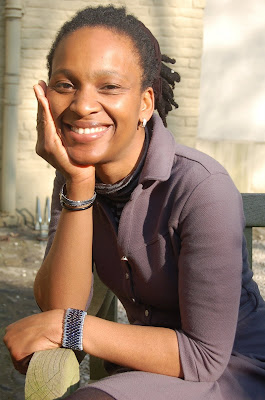
Pictures: (From Up: Adaobi Tricia Nwaubani, Chimamanda Adichie, and Chika Unigwe.
Clarion Chukwurah’s Clarion Call at her 30 Years on Stage and Screen

It was an exquisite celebration of an enviable life, memento of a long-lasting memory of excitement for all lovers of fun, a cultural carnival of some sort and a congregation of who is who in the music and movie industry. These are partial descriptions of the three-in-one celebration of the life of a stage and screen icon, Clarion Chukwurah. The well-packaged grandeur which took place at Bolajoko Hall Event Centre, Ikeja Lagos was to commemorate the 30th acting anniversary, 45th birthday celebration and the formal presentation of legacy initiative of Clarion Chukwurah.
Inspired by Late Michael Joseph Jackson
Clarion Chukwurah who was described “as a very good representative of Theatre Arts in Nigeria” by Mrs. Joke Muyiwa Fadirepo, Head of Department of Performing Arts, Olabisi Onabanjo University and “a very good interpreting actress” in the words of Dr. Sumbo Marinho of Zmirage, Lagos, was inspired by the late King of Pop, Michael Joseph Jackson when she was 4. The dream however, came into manifestation at the age of 15 when she passed the audition and became the youngest Semi-professional Actor/Member of the University of Ibadan Performing Company where she played the lead actress alongside Sam Loco Efe, one of the most hilarious Nigerian actors.
Clarion Chukwurah who was described “as a very good representative of Theatre Arts in Nigeria” by Mrs. Joke Muyiwa Fadirepo, Head of Department of Performing Arts, Olabisi Onabanjo University and “a very good interpreting actress” in the words of Dr. Sumbo Marinho of Zmirage, Lagos, was inspired by the late King of Pop, Michael Joseph Jackson when she was 4. The dream however, came into manifestation at the age of 15 when she passed the audition and became the youngest Semi-professional Actor/Member of the University of Ibadan Performing Company where she played the lead actress alongside Sam Loco Efe, one of the most hilarious Nigerian actors.
 Why She is Still Relevant
 Clarion in her speech boldly stated that the reason she is still relevant and consistent is because of her children. “They give me confidence”, she said emphatically. The hall became charged with emotion, diluted with a solemn quietness, with all eyes focused straight on the stage when Clarence Peters, the eldest of Clarion’s children approached her mother, went down on his knees like a boy who has come to reconcile with an estranged girlfriend and proudly said “I love you mother.” This was a symbol of loyalty and humility to a mother who has made his son proud through her chosen career.
Clarion’s Clarion Call
To Clarion, the event was more than the celebration of her 30 years in acting; it was a presentation of her initiative – Clarion Chukwurah Initiative, a registered charity organization that raises support for the less-privileged in the society. She had said: “this is different from other Non-Governmental Organisations we have around us because at the initial stage we were doing our own work without soliciting for any support from anybody or group.” She used the opportunity to thank her supporters especially her son, Clarence Peters whose support she disclosed started right from when he was in school. Clarion also made a clarion call to all well-meaning Nigerians to cultivate the habit of extending help to the less-privileged in our society.
To Clarion, the event was more than the celebration of her 30 years in acting; it was a presentation of her initiative – Clarion Chukwurah Initiative, a registered charity organization that raises support for the less-privileged in the society. She had said: “this is different from other Non-Governmental Organisations we have around us because at the initial stage we were doing our own work without soliciting for any support from anybody or group.” She used the opportunity to thank her supporters especially her son, Clarence Peters whose support she disclosed started right from when he was in school. Clarion also made a clarion call to all well-meaning Nigerians to cultivate the habit of extending help to the less-privileged in our society.
What You Missed


The event was beautifully packaged to satisfy the interest of every guest. For those who are lovers of God, Evangelist Toye Okanlawon was on hand to open the ceremony with prayer. For the sake of patriotism and national identity, the National Anthem was sung. For lovers of Fuji music, Pasuma was there with his waist-wriggling damsels who enticed and captivated the guests with their well-lubricated waists and highly-greased joints. (Lord, have mercy. I pitied any woman who didn’t accompany her husband there). For lovers of children, there were children from various orphanages. For lovers of pretty faces, the sexy ushers who were lusciously dressed in red attire were available. For the delights of movie and theatre, Professor Yerima Ahmed of the National Theatre was there and for the lovers of Clarion Chukwurah, everyone was there.
Wednesday, December 16, 2009
What’s New about the New Year?
By: Emmanuel Nathan Oguche (ANIPR)
The time was 12 O'clock. The entire city was basking in
 the euphoria of excitement as those awake were chanting what seemed like songs of victory amidst nauseating noise of “knock-out” that was ravaging every nook and cranny. People starved themselves of sleep and replaced the silent night with earsplitting vigil, just to have a glimpse of the moment they had dreamt of. The screeching of the wall clock added glamour to the noise as the long hand of the clock was rested on the short one. Obviously, the time was 12:00 am and this was what set the ball of celebration rolling in the air.
“What’s the madness all about?” I asked Silas. But the look on his face seemed like "who’s this mad person that’s talking about madness?" “Nathan, Happy new year. This is 2010, have you forgotten? You should be happy…I mean you should be excited”
The look on my face was that of disappointment but it seemed to me that my brother was even more disappointed when I, like an iconoclast, smashed this question on his face: “What’s new about the new year?”
“In 2009” I continued, “there were 24 hours per day for everyone; we slept at night and hustled in the day; there were 7 days in a week and 12 months in the year. Are all these going to change in 2010?” Absolute silence preceded this question. Everyone, including my Dad and other siblings who were hitherto showing contempt to the argument were uncontrollable pulled to it. Yes, they had no choice than to ponder on it. You too have become part of that discourse! Let’s move there!!
See what’s new about the New Year:
Nothing is new in this 2010 except you.
Enthuse yourself with the spirit of optimism and damn all your past losses.
Whet your appetites to dispensing what is good and add value to your society.
Yearn for greater heights for there’s danger staying in one place.
Electrify yourself with new ideas for new challenges await you.
Attitude is everything; put on positive minds and decline every rag of misery.
Relate with people and your Maker, for you cannot conquer the year all alone.
Yearn for greater heights for there’s danger staying in one place.
Electrify yourself with new ideas for new challenges await you.
Attitude is everything; put on positive minds and decline every rag of misery.
Relate with people and your Maker, for you cannot conquer the year all alone.
Can you now see what New Year is all about? I’ve posted this because you mean so much to me, you too can do same to those you love.
Wednesday, December 9, 2009
25 years later: Kunle Adeyemi still dispatching
It was a carnival galore and harvest of cultural dispatches at Quintessence Arts Gallery, Ikoyi when Kunle Adeyemi in a solo art exhibition titled “Kunle Adeyemi: Dispatches from my Art”
celelebrated  his 50th birthday and 25th Anniversary since graduation from the prestigious Yaba School of Printing and Graphic Arts. Mr. Adeyemi’s exhibits are deeply rooted in the tradition, especially the traditions of the Yoruba people while his combination of abstract and realism genuinely brings out the beauty of his works and a time, makes the work interestingly complex. Enjoy this brief and short interview with Prince Kunle Adeyemi. Exerpt:
his 50th birthday and 25th Anniversary since graduation from the prestigious Yaba School of Printing and Graphic Arts. Mr. Adeyemi’s exhibits are deeply rooted in the tradition, especially the traditions of the Yoruba people while his combination of abstract and realism genuinely brings out the beauty of his works and a time, makes the work interestingly complex. Enjoy this brief and short interview with Prince Kunle Adeyemi. Exerpt:The journey has been very rough but thank God for the success.
Can we now say you’re a fulfilled artist?
Yes, judged by all standards. It could be better. I don’t have any regret because I enjoy all that I’m doing. I try as much as I can to preach to the young ones so that they can imbibe the culture of hard work, the culture of success to a product, and the culture of great dexterity.
Your collections are all rooted in the African traditions, what do you do to integrate the contemporary youths who seem to be a bit distant from their culture?
That’s one of the reasons why this exhibition is organized. I’m using this platform to announce to the youth that we have origin and that we’re coming from somewhere. We can’t negate this. I remind them that we have a source.
Some artists find it difficult to part with certain works of theirs; do you have such kind of works?

Yes, there are some works I don’t want to part with. But I still feel I have to express myself. When you have such pieces government should come secretly and buy them from you because these are rare cases. Unfortunately our government does not appreciate art works the manner those in abroad do. These are some of the problems we’re encountering.
What advice do you have for the younger artists?
They should work hard and be sincere to themselves. Becoming great is a process, there’s no short-cut to success. I believe that when you work hard and with God on your side you’ll get to an enviable height.
Thank you for your time and happy birthday.
You're welcome. Thanks for your time too.
Friday, December 4, 2009
"I was caught reading Shakespear book"- ANA President
Dr. Wale Okediran is a man who wears more than three caps on his head; for he’s a medical doctor, a legislative consultant, was the president of As sociation of Nigerian Authors (ANA) as at when this interview was conducted and also a father. These numerous caps on his head do not however make him unaccessible as he would always squeeze time out of his tight schedule in order to grant media interview. While in Abuja, I made it a point of duty to have a chat with him. "Still at work. Can we meet to night at Biobak’s restaurant Nass Qtrs, Apo, I’m traveling early tomorrow." This was his reply to the SMS sent him. Sit back and enjoy as he shares his opinion on the benefits of reading. Exerpt:
 sociation of Nigerian Authors (ANA) as at when this interview was conducted and also a father. These numerous caps on his head do not however make him unaccessible as he would always squeeze time out of his tight schedule in order to grant media interview. While in Abuja, I made it a point of duty to have a chat with him. "Still at work. Can we meet to night at Biobak’s restaurant Nass Qtrs, Apo, I’m traveling early tomorrow." This was his reply to the SMS sent him. Sit back and enjoy as he shares his opinion on the benefits of reading. Exerpt:
You’re a medical, literary and legislative consultant. How are these interwoven?
These are the interests I developed right from when I was young. From my secondary school days I developed keen interest in reading and writing. I edited a campus newspaper was in the University and of course I’m a trained medical doctor. When I went into politics I also imbibed a lot of skills which some people felt should not be wasted, that’s why I was appointed as a consultant to the National Assembly Committee on Health.
You must then be a voracious reader?
A good writer must also be a good reader. In my secondary school days I devoted a significant amount of time to reading. While in the medical school my lecturer has ever caught me reading Shakespeare books under the desk during lectures. As a trained medical doctor too, you must also be a good reader. All these have worked together.
Let’s have a peep into your library, what are the kinds of books in there?
You’ll first of all find literary books, ranging from Russian literatures, Chinese literatures to the Nigerian literatures. I read western books a lot. My medical books are there because I still maintain a medical column in the Nigerian Tribune. My hospital at Ibadan is still being run by a colleague of mine. I believe that one day I’ll go back and retire as a medical doctor. And then, my Bible and Koran too. To make it balance.
Who’s your favourite author?
I’m very partial to Russian literatures.
It seems you have biase for foreign books, why?
I mentioned Yellow Yellow and Half of a Yellow Sun of Chimamanda Adichie. May be I’m a victim of second-hand colonialism. I went to a Baptist secondary school and our library was stocked with books sent by foreign missionaries, usually second-hand books. But that doesn’t mean that I don’t like Nigerian books.
How do you encourage your children to read?
I buy them books frequently. I buy books for my wife and friends too. It shows my great concern about their reading culture.
What measures do you put in place so that you books are not destroyed or stolen?
I’m very passionate about my books and I get very upset if my someone doesn’t return my books after he or she has lend it from me. I keep most of my most valuable books in my bedroom. I make sure that my shelf is not kept in a dampen place and I do open windows to allow cross ventilation.
Readers are leaders or readers are leaders, what’s your take on this?
I think readers are leaders because not all readers read. A good reader would make a good leader because they learn a lot. You learn patience, perseverance, dignity and honour.
Indigenous cultures and literature are on a decline, what measures can be put in place to encourage indigenous language though reading and writing?
Yes, Association of Nigerian Authors (ANA) has observed what you just mentioned. We have been trying all we can to encourage indigenous writing as a body. One of our cardinal objectives is to encourage indigenous writing because Nigerian literature is on the decline. We organize workshops, we bring young men and women together, we encourage them. But the onus still lies on the parents to encourage their children and wards especially from a tender age.
On a final note, what advice do you have for those who see reading as drab and uninteresting?
It’s a tragedy, the worst tragedy for that matter for any human being to describe reading as being drab. By reading a book or magazine, you could stumble on something that may change your life forever.
These are the interests I developed right from when I was young. From my secondary school days I developed keen interest in reading and writing. I edited a campus newspaper was in the University and of course I’m a trained medical doctor. When I went into politics I also imbibed a lot of skills which some people felt should not be wasted, that’s why I was appointed as a consultant to the National Assembly Committee on Health.

You must then be a voracious reader?
A good writer must also be a good reader. In my secondary school days I devoted a significant amount of time to reading. While in the medical school my lecturer has ever caught me reading Shakespeare books under the desk during lectures. As a trained medical doctor too, you must also be a good reader. All these have worked together.
Let’s have a peep into your library, what are the kinds of books in there?
You’ll first of all find literary books, ranging from Russian literatures, Chinese literatures to the Nigerian literatures. I read western books a lot. My medical books are there because I still maintain a medical column in the Nigerian Tribune. My hospital at Ibadan is still being run by a colleague of mine. I believe that one day I’ll go back and retire as a medical doctor. And then, my Bible and Koran too. To make it balance.
Who’s your favourite author?
I’m very partial to Russian literatures.
It seems you have biase for foreign books, why?
I mentioned Yellow Yellow and Half of a Yellow Sun of Chimamanda Adichie. May be I’m a victim of second-hand colonialism. I went to a Baptist secondary school and our library was stocked with books sent by foreign missionaries, usually second-hand books. But that doesn’t mean that I don’t like Nigerian books.
How do you encourage your children to read?
I buy them books frequently. I buy books for my wife and friends too. It shows my great concern about their reading culture.
What measures do you put in place so that you books are not destroyed or stolen?
I’m very passionate about my books and I get very upset if my someone doesn’t return my books after he or she has lend it from me. I keep most of my most valuable books in my bedroom. I make sure that my shelf is not kept in a dampen place and I do open windows to allow cross ventilation.
Readers are leaders or readers are leaders, what’s your take on this?
I think readers are leaders because not all readers read. A good reader would make a good leader because they learn a lot. You learn patience, perseverance, dignity and honour.
Indigenous cultures and literature are on a decline, what measures can be put in place to encourage indigenous language though reading and writing?
Yes, Association of Nigerian Authors (ANA) has observed what you just mentioned. We have been trying all we can to encourage indigenous writing as a body. One of our cardinal objectives is to encourage indigenous writing because Nigerian literature is on the decline. We organize workshops, we bring young men and women together, we encourage them. But the onus still lies on the parents to encourage their children and wards especially from a tender age.
On a final note, what advice do you have for those who see reading as drab and uninteresting?
It’s a tragedy, the worst tragedy for that matter for any human being to describe reading as being drab. By reading a book or magazine, you could stumble on something that may change your life forever.
Thank you very much
You're welcome.
Wednesday, December 2, 2009
Kidnapping, Insecurity and all of us

“My family members, especially my father will be happy if I’m kidnapped today; at least he’ll be fraught with fewer mouths to feed.”
This was a response to one of my posts on the Facebook. Can you blame this friend of mine? The political and social conditions of our environment has conditioned us to believe that only the rich, the top-echelon, the bourgeoisies and the petty-bourgeoisies need security. But the recent spate of kidnapping and hostage-taking that is sweeping the entire country has kept everyone on his toes as there’s now a shift in paradigm as to what national security is all about and for whom it’s meant.
Kidnapping, there’s no doubt started on the shores, creeps, waters, and sand ways of the Niger-Delta area. Ask any Nigerian, they’ll tell you so. The area used to be synonymous with hostage-taking until the militant later recourse to open confrontation to drive in their point. At the infant stage of kidnapping in the Niger-Delta area, the targets were mainly expatriates- Italians, Filipinos, Americans, German- who work with various oil companies. The militants used kidnapping to drive home their point. But gradually, hostage-taking degenerated into an enterprise of immense complexity; it suddenly became a money making business and prominent people were even believed to be part of the business as they mobilized militant youths to kidnap for pecuniary gains. Our leaders, at this time still sat in akimbo as nothing serious was done to mitigate the activities of the kidnappers. After all, none of the top government officials ever fall a victim at that time
With the unimaginable abduction of Dr. Chris Ngige on July 10, 2003 while in office, the scope of victims of kidnapping was expanded to accommodate political office holders. Many Nigerians never believed that government officials can suffer that kind of traumatic incident. Though many commentators were of the opinion that Dr. Chris’ abduction was politically motivated, yet one cannot ignore the financial ransom that was demanded and perhaps paid before he was released. The same thing could be said of the kidnap of Pa Simeon Soludo, the father of the former Governor of Central Bank of Nigeria (CBN) and the People’s Democratic Party’s gubernatorial candidate of Anambra State. Several other kidnapping were political motivated or seems so but one thing is certain, ransom is equally demanded and paid.
Recently too, the Nollywood industry has become a fertile ground where kidnappers are planting their seeds of destruction. First, it was Peter Edochie one of the most respected Nollywood actors. Initially, I thought with the kind of authority and power Edochie exhume whenever he acts films he’ll not be able to be intimidated by his abductors but whenever on is in the hands of gun carriers, one has to submit his erudition, intellectualism and oratory. If it were movie, it wouldn’t have been possible for Edochie to be kidnapped.
What about Nkem Owoh (Osofia), the goddess of comedy film in Nigeria? When I got the news I concluded that kidnappers lack the sense of homour and wanted to have be entertained by Osofia in dungeon! Ransom was demanded.
Keen observers of kidnapping and hostage taking in Nigeria would agree with me that two forms exist. There’s economic kidnapping which is strictly for money. There’s political kidnapping which may a times in the form of economical kidnapping but primarily for political gains. But whichever form it may be, somebody life is usually at jeopardy and ransom is always demanded. But it’s an indication of a failed structures be it polical, social, cultural or religious. If all the necessary structures are not put in place time will come that it will seep into all corners of Nigerian society if it has not happened yet.
Some Governors and Houses of Assembly at different time have recommended death sentence to kidnappers. To me, no penalty is too big for any man who abducts his fellow being for a ransom. But is there any justification if pot shamefully calls kettle black? What about political kidnappers who have been sabotaging the economic interests of this country? What about those leaders who hold our national treasury to ransom with all impunity? What’s their penalty? A situation where by few minority perpetually takes the advantage of the disadvantaged and handicapped majority, kidnapping becomes a retaliatory repercussion to deal with those in power. Its dog eats dog scenario, only the fittest survives.

What are the areas of intervention? Of course, Nigerians and all her leaders are well abreast of those grey areas that have been giving us bad name among the comity of nations. Leaders at all levels should embrace good governance for kidnapping or hostage-taking is a hallmark of flaws and defect in the social and political structures of our society. The Nigerian Police should be well equipped technically and morally to fight saboteurs and kidnappers for as it is now, kidnappers are more confident than the police. Government should provide job opportunities to her citizenry whom have found economic solace in hostage taking due to joblessness. Kidnapping and insecurity is not a class thing, it affects every Nigerian irrespective of economic status. Let’s come together to fight terrorism in its simplest form.
Subscribe to:
Posts (Atom)